Dehydrated vs Freeze-Dried Korean Dog Treats: Which Is Better?
Compare dehydrated vs freeze-dried Korean dog treats. Learn about nutrient density, shelf life, and why Korean manufacturing standards matter for your pup.
In this article
- 01Key Takeaways: Dehydrated vs Freeze-Dried Korean Dog Treats
- 02What Is the Difference Between Dehydration and Freeze-Drying?
- 03Is Freeze-Drying Better for Nutrient Retention?
- 04Why Does Korean Manufacturing Matter for These Treats?
- 05Which Treat Type Is Best for Picky Eaters?
- 06How Long Do Dehydrated vs Freeze-Dried Treats Last?
- 07Frequently Asked Questions
- 08The Bottom Line
- 09Sources
Dehydrated vs Freeze-Dried Korean Dog Treats: Which Is Better?
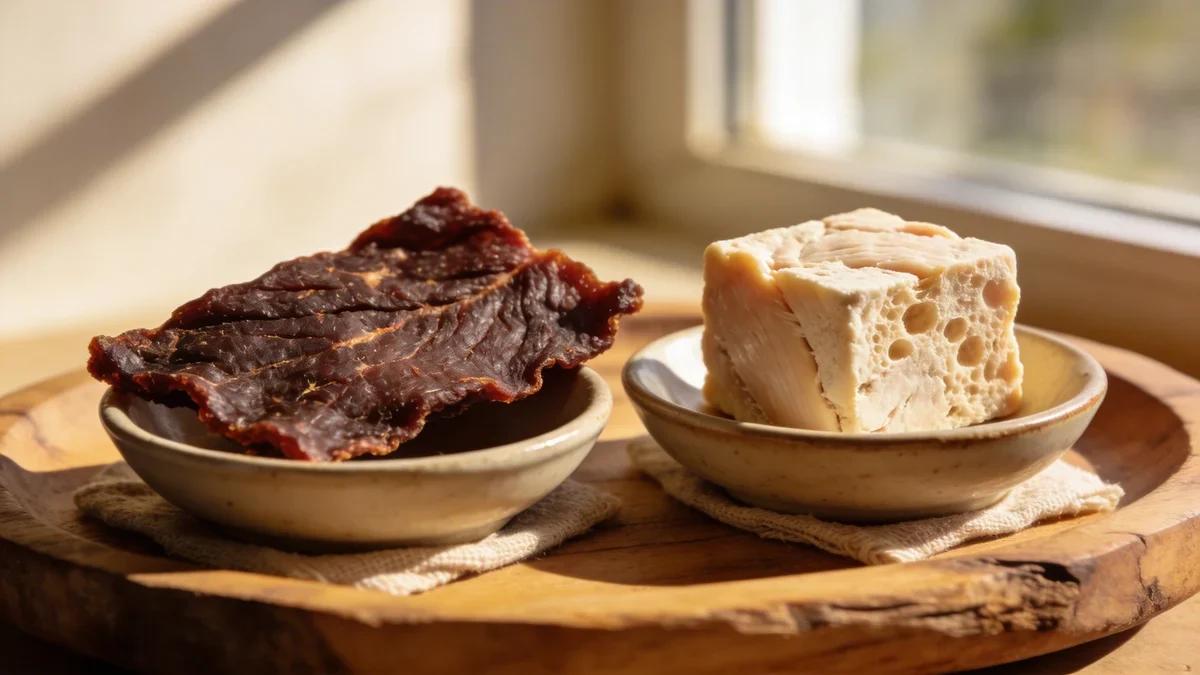
Key Takeaways: Dehydrated vs Freeze-Dried Korean Dog Treats
- Freeze-drying retains approximately 97% of a food's original nutritional value, making it the superior choice for nutrient density
- Dehydration removes 75–90% of moisture using low heat and air circulation, producing the satisfying chewy texture dogs love in treats like Korean beef jerky
- Freeze-drying removes 98–99% of moisture through a cold vacuum process — no heat means no damage to sensitive vitamins
- Heat-sensitive vitamins like Vitamin C and Thiamin can drop by 20–50% during high-heat drying
- Korean manufacturing standards apply human-grade food processing rules to pet treats, setting a higher baseline than most domestic producers
- Freeze-dried treats are 70–90% lighter than their original weight, which matters for portioning and storage
What Is the Difference Between Dehydration and Freeze-Drying?
When choosing dehydrated vs freeze-dried Korean dog treats, the first thing to understand is that both methods share one goal — removing moisture to extend shelf life — but they get there in completely different ways, and those differences show up directly in your dog's treat bag.
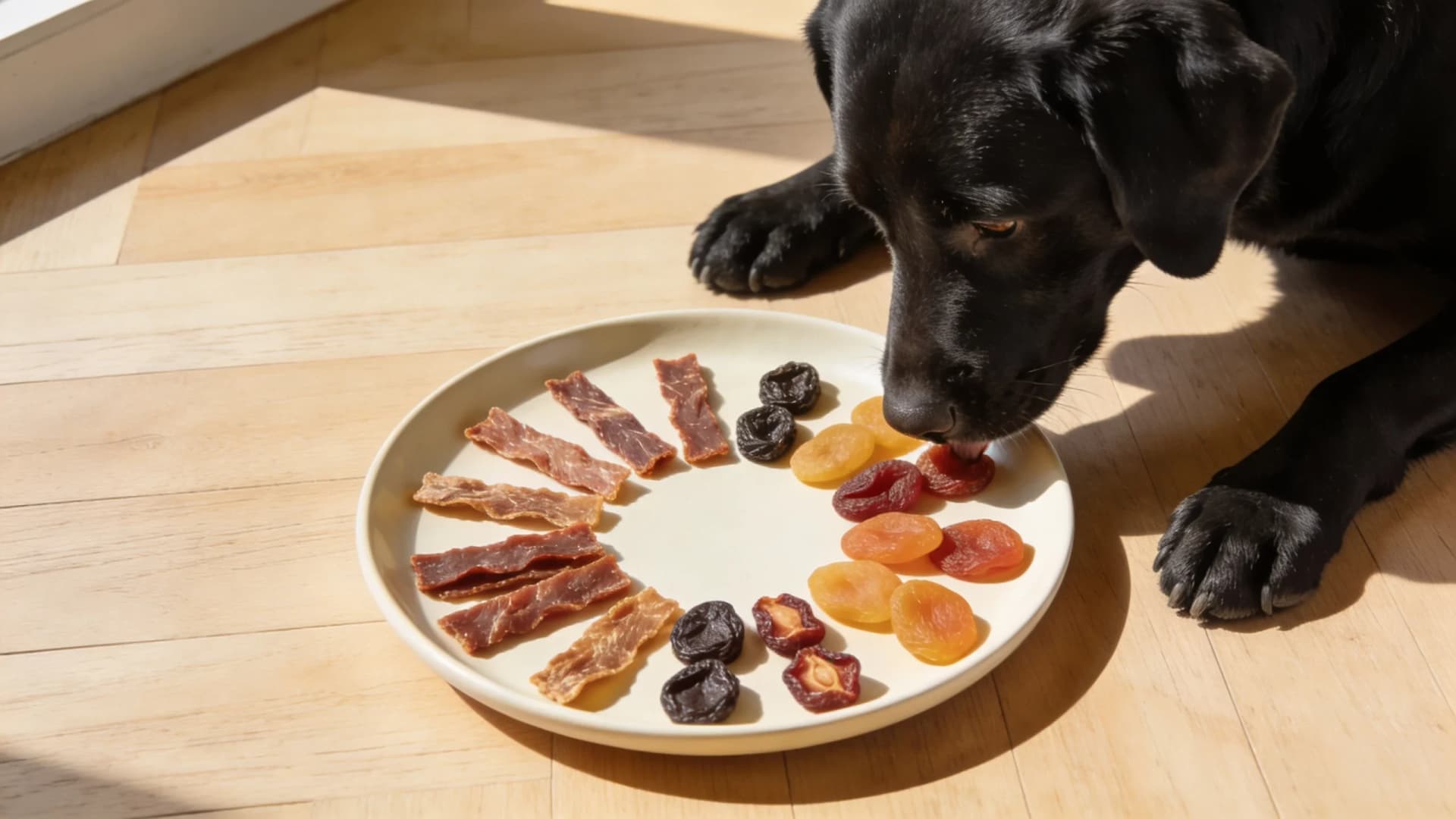
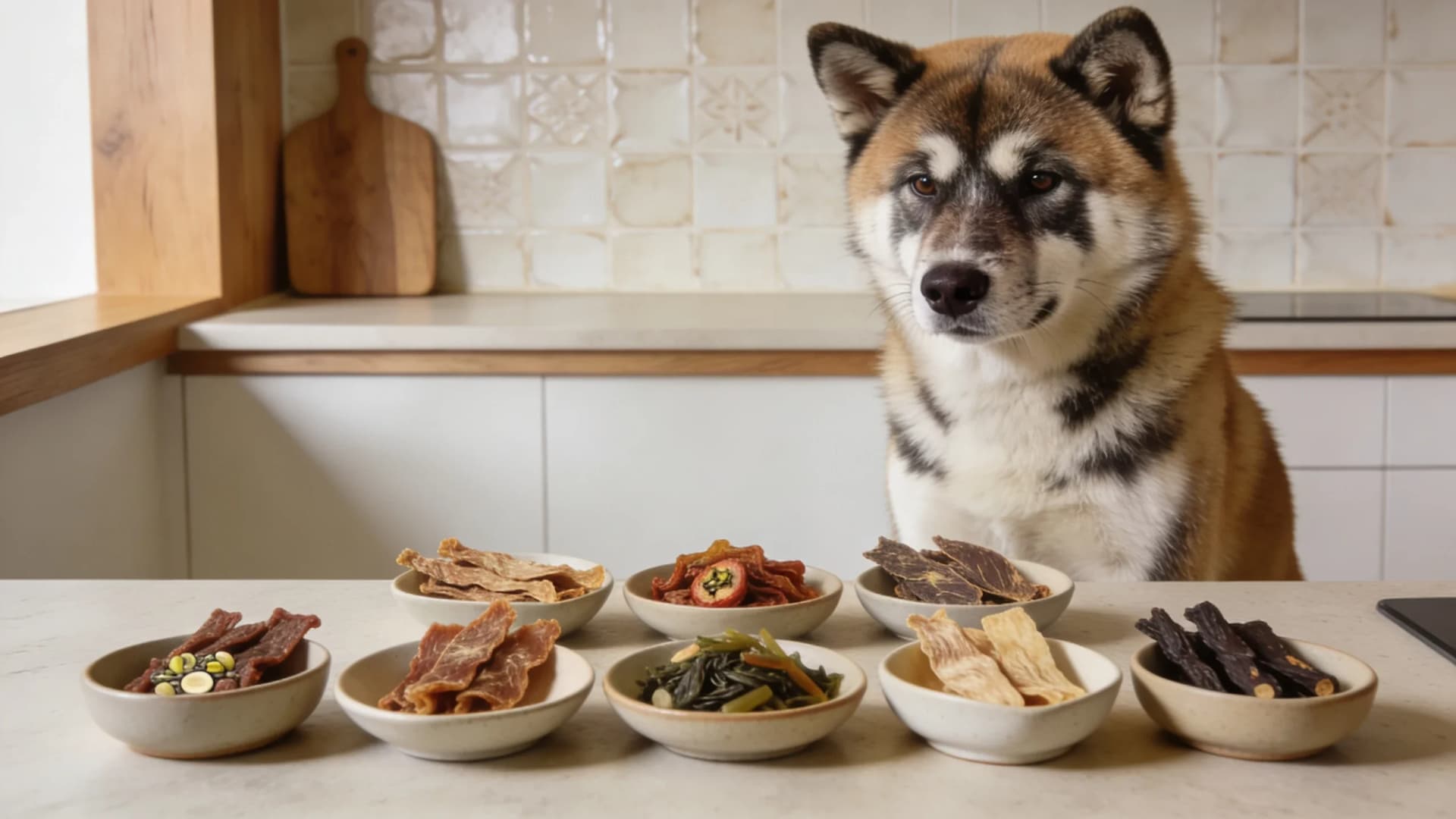
Dehydration works through evaporation. Ingredients are exposed to low heat (typically 130–165°F) and circulating air over several hours. The heat turns liquid water into vapor, which escapes the food. The result is a dense, chewy product with concentrated flavor — think of the satisfying pull of Korean goguma (sweet potato) jerky or thinly sliced beef strips. Dehydrated treats hold their shape well, have a familiar texture dogs can really work through, and are generally more affordable to produce.
Freeze-drying uses a cold vacuum process. The food is first frozen solid, then placed in a vacuum chamber where pressure drops low enough that ice turns directly into vapor — skipping the liquid phase entirely. No heat is applied at any point. The cell structure of the ingredient stays almost completely intact, which is why freeze-dried chicken or fish crumbles back into something close to its original state when you add water.
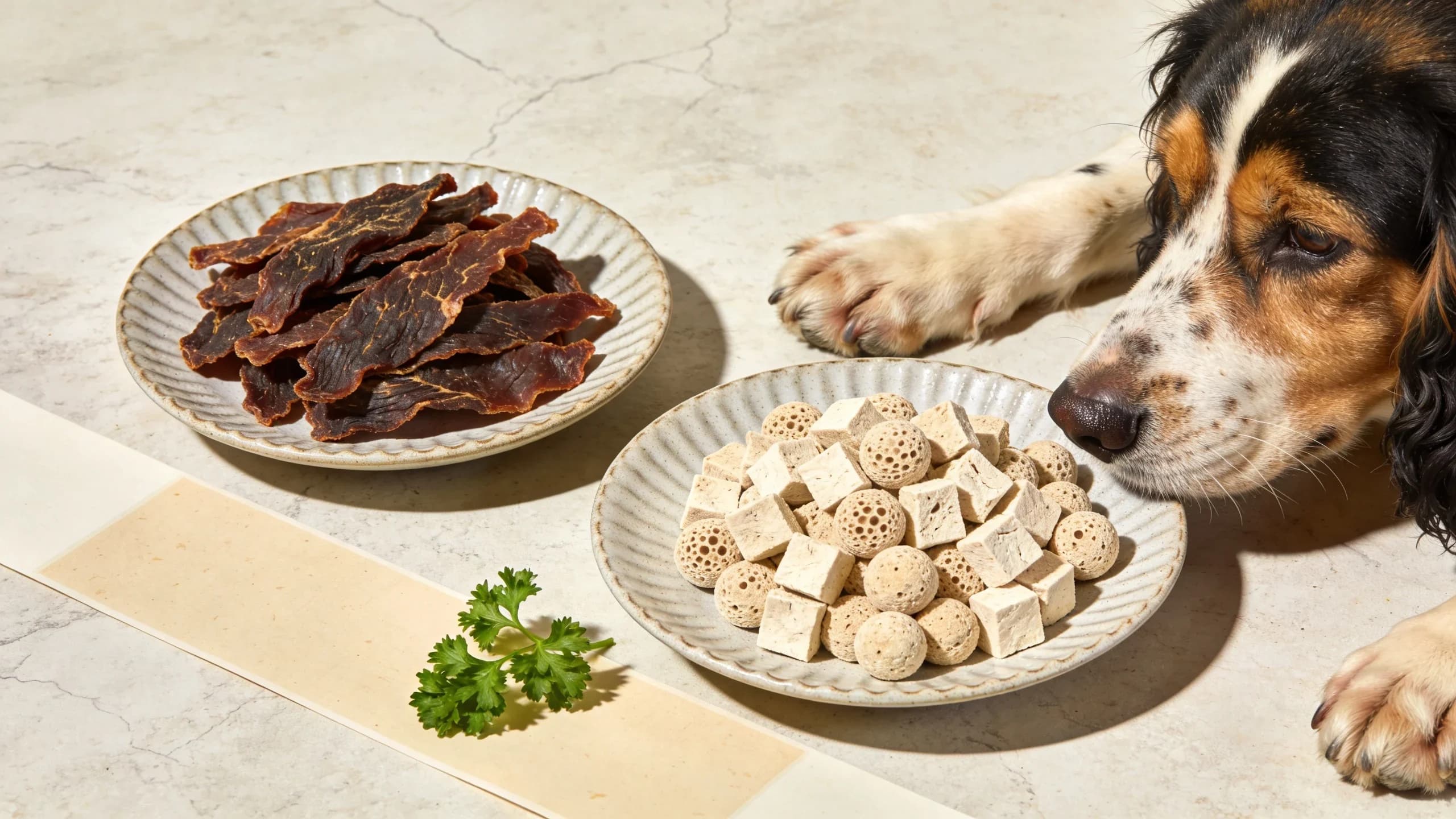
Texture-wise, freeze-dried treats are light, porous, and almost melt-in-the-mouth. Dehydrated treats are firm and chewy. For a deeper look at how these ingredients behave in different treat formats, see the complete guide to Korean dog treat ingredients, benefits, and what to know.
Dehydration removes 75–90% of moisture; freeze-drying removes 98–99% — a difference that directly affects texture, weight, and nutrient stability. (Journal of Food Engineering)
Is Freeze-Drying Better for Nutrient Retention?
Yes — and the gap is meaningful, not marginal.
Because freeze-drying never applies heat, it preserves enzymes, probiotics, and heat-sensitive vitamins that dehydration breaks down. Thiamin (Vitamin B1) and Vitamin C are the most vulnerable nutrients. Research shows these vitamins can decrease by 20–50% during high-heat drying, depending on temperature and duration (USDA Agricultural Research Service). For a dog eating treats as a supplemental nutrition source, that loss adds up over time.
Freeze-drying typically retains about 97% of the original nutritional value of ingredients (FDA Food Preservation Guidelines). Proteins stay structurally intact. The building blocks of protein — amino acids — remain close to what you'd find in the fresh ingredient. If you're using treats to add real nutrition to your dog's day — omega-3s from freeze-dried salmon, gut-friendly probiotics from fermented toppers, or beta-carotene from goguma — freeze-dried is the format that actually delivers those benefits.
That said, dehydration isn't nutritionally empty. Minerals like zinc, iron, and calcium hold up well to heat and survive the drying process with little loss. The tradeoff is real but specific: freeze-dried wins on vitamins and enzymes; dehydrated holds its own on minerals and overall protein content.
Freeze-drying preserves enzymes and probiotics that heat-based drying destroys — a key advantage for dog owners using treats as a functional nutrition source. (USDA Agricultural Research Service)

Why Does Korean Manufacturing Matter for These Treats?
Understanding the processing difference is only half the picture. The other half is where and how those ingredients are sourced and made — and this is where Korean-made treats stand apart from most of the competition.
South Korea applies human-grade food processing standards to its pet treat manufacturing — a distinction that isn't just marketing language. Korean facilities producing pet treats are overseen by the Ministry of Agriculture, Food and Rural Affairs (MAFRA), which enforces ingredient sourcing, facility cleanliness, and labeling requirements that are comparable to those applied to human food production.
The results are measurable. The Korean pet food market has grown at an average annual rate of over 10%, driven in large part by consumer trust built on those quality controls (MAFRA Korea). Korean manufacturers producing both dehydrated and freeze-dried treats operate under rules that include full traceability from farm to bag, heavy metal testing, and a ban on artificial preservatives like glycerin and propylene glycol — additives still found in many American and Chinese-manufactured treats.
This matters directly for the dehydrated vs freeze-dried comparison because the quality of the starting ingredient affects both formats equally. A freeze-dried treat made from low-grade chicken meal retains 97% of very little. A Korean-manufactured dehydrated hanwoo beef strip starts with a higher-quality raw material, which raises the nutritional ceiling regardless of which processing method is used. Korean manufacturing standards make both treat types better — freeze-dried and dehydrated alike.
Korean pet treat manufacturers operate under MAFRA oversight, applying the same traceability and testing standards used in human food production — a baseline most domestic producers don't match. (MAFRA Korea)
For a full breakdown of what those standards look like in practice, read are Korean dog treats safe? Ingredient standards and testing explained.
Which Treat Type Is Best for Picky Eaters?
Smell drives a dog's interest in food more than any other factor, and the two formats produce very different scent profiles.
Freeze-dried treats keep the strong, natural smell of the original ingredient. Freeze-dried venison, salmon, or chicken liver smells close to what it would smell like fresh — which is exactly why dogs react so strongly to it. The aromatic compounds that make meat smell like meat are preserved by the cold process. For a dog that turns its nose up at most treats, freeze-dried is often the format that finally gets a reaction.
Dehydrated treats, particularly Korean-style beef or chicken jerky, develop a different kind of appeal through the drying process itself. A natural browning reaction — the same chemistry behind roasted meat and toasted bread — creates new savory smell compounds during low-heat drying that don't exist in raw food. Korean beef jerky for dogs carries that rich, slightly caramelized smell that many dogs find just as exciting as fresh-smelling freeze-dried options.
Texture matters for picky eaters too. Some dogs reject freeze-dried treats because the light, crumbly texture doesn't match their idea of a "real" treat. Chewy dehydrated jerky satisfies the instinct to work and gnaw — which for many dogs is half the enjoyment.
For picky eaters, freeze-dried treats deliver an intense raw-meat aroma that's hard to resist, while dehydrated jerky offers a rich, savory smell that many dogs find equally compelling. (Institute of Food Technologists)
If your dog is a texture-driven picky eater, learn more about what makes the chew experience different in Korean beef jerky for dogs: how it's made and what to look for.
How Long Do Dehydrated vs Freeze-Dried Treats Last?
| Format | Sealed Shelf Life | Post-Opening Window | Storage Requirement |
|---|---|---|---|
| Dehydrated | 12–24 months | 2–4 weeks | Cool, dry place; reseal tightly |
| Freeze-Dried | Up to 25 years (sealed, oxygen-purged) | 30 days | Airtight container; avoid humidity |
The 25-year freeze-dried shelf life applies to commercially sealed, oxygen-purged pouches — not the bag sitting on your counter. For everyday dog owners, the number that matters is the 30-day post-opening window for freeze-dried treats. Once exposed to air and humidity, the porous structure of freeze-dried food soaks up moisture quickly, which speeds up spoilage.
Dehydrated treats are more forgiving after opening because their denser structure slows moisture reabsorption. A well-sealed bag of dehydrated sweet potato chews stays fresh for 3–4 weeks without much fuss.
Freeze-dried foods are roughly 70–90% lighter than their original weight, which also makes them easier to store in larger quantities without taking up much space. (Institute of Food Technologists)
Neither format requires refrigeration before opening. After opening, refrigeration extends both — but freeze-dried treats are sensitive to the condensation that forms when a cold bag is brought to room temperature repeatedly. If you refrigerate freeze-dried treats, let the bag come to room temperature before opening to avoid moisture damage.
Frequently Asked Questions
Can I rehydrate freeze-dried Korean dog treats?
Yes — freeze-dried treats rehydrate quickly with a small amount of warm water, usually within 30–60 seconds. This makes them useful as meal toppers or for senior dogs who need softer food. The texture after rehydrating closely resembles the original fresh ingredient because the cold drying process keeps the cell structure intact. Only rehydrate what your dog will eat right away; once wet, freeze-dried treats can spoil within a few hours at room temperature, so don't leave them sitting out.
Are dehydrated treats harder for dogs to digest than freeze-dried?
Freeze-dried treats are generally easier to digest because the food behaves more like fresh meat in the digestive system. Dehydrated treats are denser and need more chewing and mechanical breakdown — which is actually a benefit for dental health and jaw exercise. Dogs with sensitive stomachs usually do better with freeze-dried formats, while healthy dogs handle both without trouble.
Do freeze-dried treats need to be refrigerated after opening?
No refrigeration is required, but airtight storage is critical. The biggest enemy of freeze-dried treats after opening is humidity, not temperature. Store them in a resealable, airtight container away from moisture. Avoid leaving the bag open between uses. If you live in a humid climate, consider portioning treats into a small daily-use container and keeping the rest of the bag tightly sealed to protect what's left.
Which costs more — freeze-dried or dehydrated Korean dog treats?
Freeze-dried treats cost more — typically 30–60% more per ounce than comparable dehydrated options. The freeze-drying process requires specialized vacuum equipment, longer processing times, and more energy than standard dehydration. Korean-manufactured freeze-dried treats carry added cost from stricter ingredient sourcing and quality controls. Dehydrated treats offer better value for high-volume reward training, while freeze-dried makes more sense for nutritional use where you're giving smaller amounts per serving.
Are dehydrated dog treats considered raw?
No. Dehydration applies heat, which means dehydrated treats are cooked — not raw. The low-temperature range (130–165°F) used in dehydration is designed to kill harmful bacteria like Salmonella while preserving flavor and chew texture. Freeze-dried treats, because they are never heated, are considered raw and carry the same handling considerations as raw meat. Wash your hands after handling freeze-dried treats, especially if anyone in the household has a weakened immune system.
Can puppies eat freeze-dried Korean treats?
Yes, with the right sizing and portion control. Freeze-dried treats are well-suited for puppies because they break into tiny pieces easily, and the high nutrient retention supports a growing dog's needs. Choose single-ingredient freeze-dried options — chicken, salmon, or sweet potato — with no added salt, spices, or preservatives. Keep treats to no more than 10% of your puppy's total daily calorie intake regardless of format, and always supervise young puppies with any treat to prevent choking.
How do I know if a Korean dog treat is high quality?
Look for a few key markers on the label. The ingredient list should be short and easy to read — a single protein or vegetable with no artificial preservatives, fillers, or flavor additives. Look for treats that clearly state the country of origin and name a specific protein source (for example, "Korean chicken breast" rather than just "poultry"). Reputable Korean manufacturers will often reference MAFRA compliance or human-grade processing standards. Avoid any treat — Korean or otherwise — that lists propylene glycol, artificial colors, or vague meat by-products in the ingredient list. When in doubt, single-ingredient treats from a named source are the safest starting point for any dog.
The Bottom Line
For maximum nutrition, choose freeze-dried Korean dog treats as meal toppers or high-value rewards — the 97% nutrient retention and intact enzyme profile make them the clear winner when functional nutrition matters most. For daily training rewards and longer chewing sessions, dehydrated Korean treats like beef jerky or sweet potato chews deliver satisfying texture and better cost-per-treat value without sacrificing the ingredient quality that Korean manufacturing standards guarantee. Both formats, made to Korean standards, outperform most conventionally produced alternatives — browse Pupsday's Korean treat collection to see both side by side and find what your dog actually wants to eat.
Sources
- Journal of Food Engineering — Food Dehydration and Freeze-Drying Research
- USDA Agricultural Research Service — Nutrient Retention in Food Processing
- FDA — Food Safety and Preservation Guidelines
- Ministry of Agriculture, Food and Rural Affairs (MAFRA), South Korea
- Institute of Food Technologists — Freeze-Drying and Weight Reduction Data
- AKC — Treating Your Dog Safely
- PubMed — Vitamin Degradation During Food Dehydration
Next step
Want help finding the right treats?
Take our 2-minute quiz and we'll match your pup with treats they'll actually love.