Are Korean Dog Treats Safe? Ingredient Standards and Testing
Discover the truth about Korean dog treat safety. We analyze MAFRA regulations, HACCP standards, and testing protocols for premium pet snacks.
In this article
- 01Key Takeaways: The Safety Profile of Korean Dog Treats
- 02Are Korean Dog Treats Safe for My Pet?
- 03How Does South Korea Regulate Pet Food Safety?
- 04What Are the Specific Manufacturing Standards in Korea?
- 05The Rise of Single-Ingredient and Human-Grade Standards
- 06Why Is Testing and Traceability More Advanced in Korea?
- 07Frequently Asked Questions
- 08The Bottom Line
- 09Sources
Are Korean Dog Treats Safe? Ingredient Standards & Testing
Key Takeaways: The Safety Profile of Korean Dog Treats
- South Korea's pet food market grows at approximately 10% annually, forcing regulatory bodies to continuously update safety standards to match demand (Korea Rural Economic Institute).
- The Ministry of Agriculture, Food and Rural Affairs (MAFRA) governs all pet food manufacturing under the revised Control of Livestock and Fish Feed Act, which applies to every registered facility in the country.
- Korean regulations set strict heavy metal ceilings: Lead ≤ 5.0 mg/kg, Cadmium ≤ 1.0 mg/kg, and Arsenic ≤ 2.0 mg/kg in finished pet food products (National Agricultural Products Quality Management Service).
- Over 60% of Korean pet owners actively seek human-grade ingredients in the treats they buy, pushing manufacturers toward cleaner formulations (Open Survey Pet Trend Report).
- Premium Korean treat brands increasingly use single-ingredient, air-dried, or freeze-dried formats with zero artificial preservatives, colorings, or glycerin.
Are Korean Dog Treats Safe for My Pet?
Yes—and the reasoning goes deeper than a simple country-of-origin stamp. When asking, "Are Korean dog treats safe?", it is essential to look at the cultural and legal shifts that have transformed South Korea into a global leader in pet food transparency.
Korea has undergone a dramatic cultural shift in how it views companion animals. Dogs moved from backyard to bedroom over the course of roughly one generation, and the industry had to sprint to keep up. The Korean term 반려동물 (ban-ryeo-dongmul)—"companion animal"—replaced the older word for "pet" in mainstream usage, signaling a genuine philosophical change. Owners aren't buying snacks; they're buying food for a family member.
That cultural pressure translates directly into market pressure. Brands that cut corners get called out fast on Korean social platforms like KakaoTalk community groups and Naver Café forums, where ingredient lists get dissected the way a Reddit thread might analyze a supplement label. The result is a consumer base that is extraordinarily ingredient-literate, and manufacturers who know it.
Over 60% of Korean pet owners prefer human-grade ingredients in pet treats—a figure that dwarfs comparable surveys in most Western markets. (Open Survey Pet Trend Report)
This demand-side pressure, combined with government regulation, creates a dual enforcement mechanism you don't see everywhere. So when you ask whether Korean dog treats are safe, the honest answer is: the structural incentives for safety are unusually strong, and the regulatory framework backs them up.
How Does South Korea Regulate Pet Food Safety?
The primary regulatory body is MAFRA—the Ministry of Agriculture, Food and Rural Affairs. Pet food, including dog treats, falls under the Control of Livestock and Fish Feed Act (사료관리법), which was significantly revised to reflect the explosive growth of the companion animal sector.
Under this framework, all pet food manufacturers must register with MAFRA, submit formulations for approval, and comply with ingredient restrictions that mirror human food standards in several categories. The Act mandates that prohibited substances—including certain synthetic antioxidants, heavy metals above threshold levels, and unapproved additives—cannot appear in finished products.
South Korea's pet food market grows at approximately 10% annually, a pace that has directly driven multiple rounds of regulatory updates since 2018. (Korea Rural Economic Institute)
The Animal and Plant Quarantine Agency (APQA) handles import and export inspection, testing thousands of pet food samples annually for pathogen contamination, pesticide residues, and heavy metals. Domestic manufacturers face unannounced facility audits. Non-compliance results in mandatory recalls and public disclosure—a reputational consequence Korean brands take seriously.
The APQA tests thousands of pet food samples annually for pesticide residues, heavy metals, and pathogen contamination, with results publicly disclosed. (Animal and Plant Quarantine Agency)
This isn't a rubber-stamp system. It's a layered inspection model with real teeth. By ensuring that every facility is registered and every formulation is vetted before it hits the shelf, the Korean government provides a level of oversight that many other countries are still working to implement.
What Are the Specific Manufacturing Standards in Korea?
HACCP—Hazard Analysis and Critical Control Points—is the backbone of Korean pet food manufacturing compliance. HACCP is an internationally recognized system that identifies biological, chemical, and physical hazards at every production stage and establishes control points to eliminate or reduce them before the product ships.
In Korea, HACCP certification for pet food facilities is administered through the Korea Institute for Animal Products Quality Evaluation and cross-referenced with MAFRA standards. Certified facilities must document temperature controls, sanitation schedules, ingredient sourcing records, and finished-product testing results—all subject to third-party audit.
Compared globally, Korean HACCP implementation is on par with EU food safety standards and, in some traceability requirements, exceeds what the FDA mandates for pet food manufacturers in the United States. (Korea Institute for Animal Products Quality Evaluation)
The FDA's pet food guidelines under FSMA (Food Safety Modernization Act) are robust, but the U.S. still does not require mandatory pre-market approval of pet food formulations—Korea does for registered manufacturers. This proactive approach helps prevent safety issues before they reach the consumer's home.
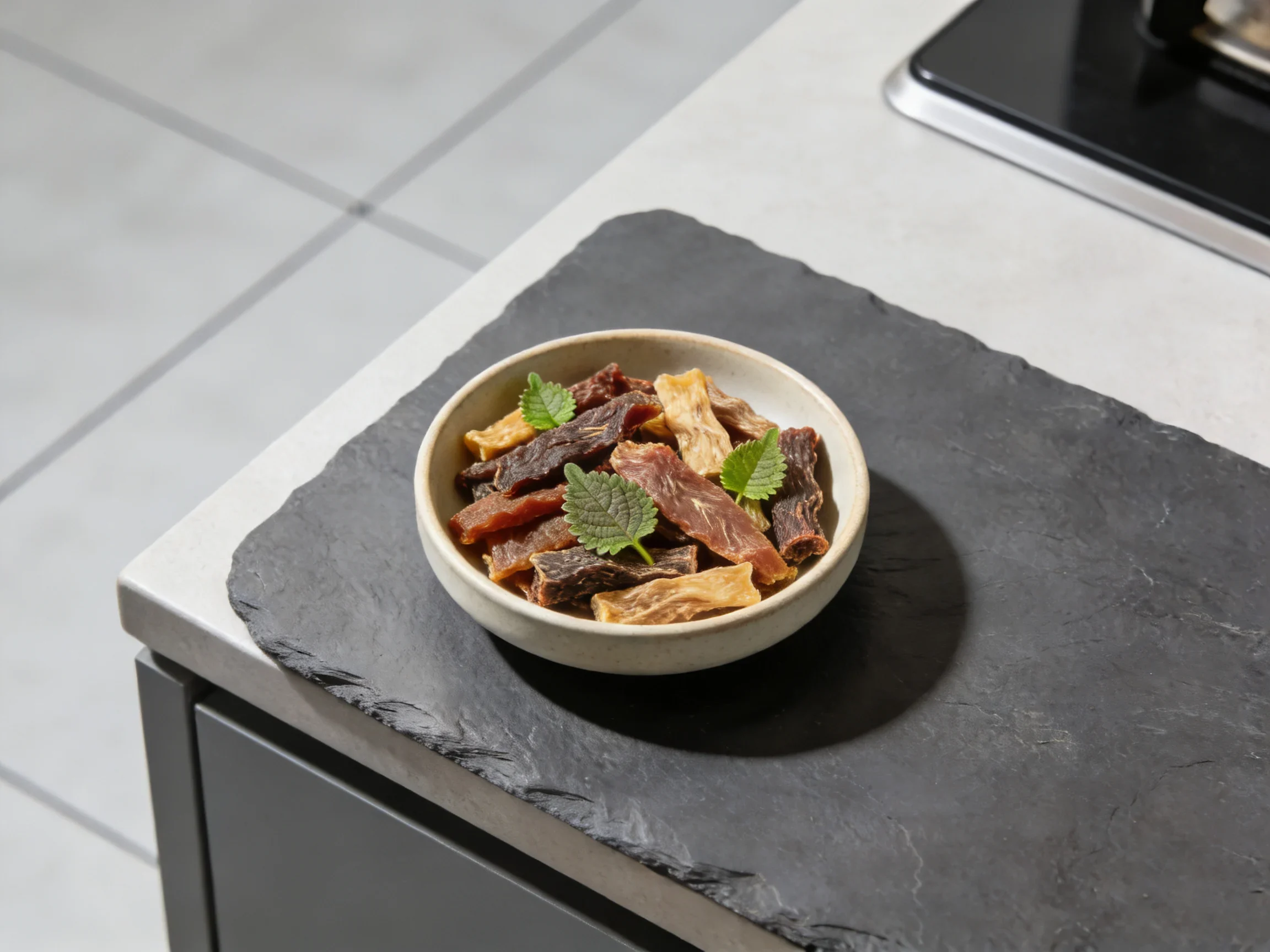
The combination of mandatory registration, formulation approval, and HACCP certification creates a manufacturing floor where shortcuts are structurally difficult to hide. For the pet parent, this means the "Made in Korea" label often represents a higher baseline of industrial hygiene.
The Rise of Single-Ingredient and Human-Grade Standards
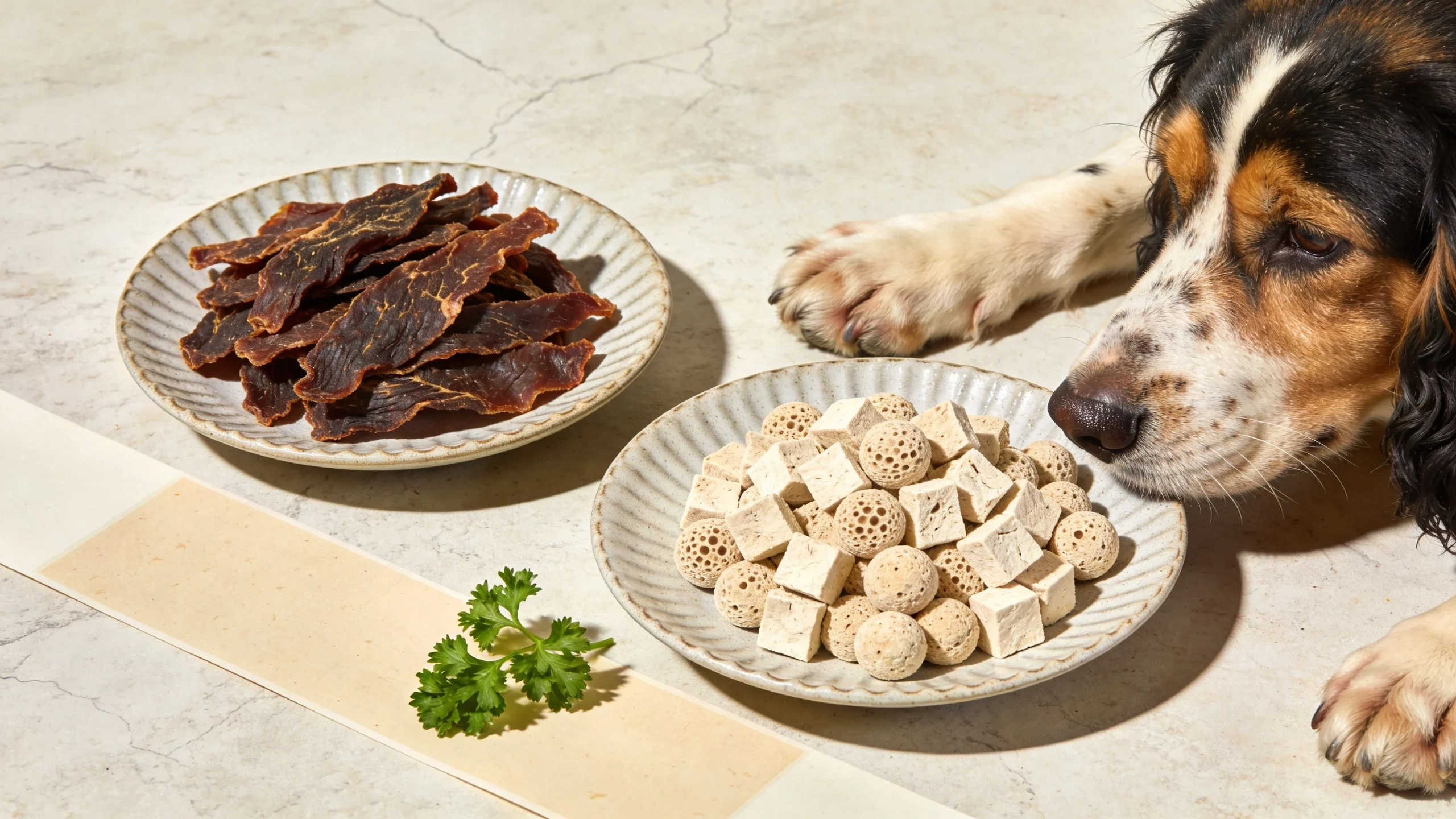
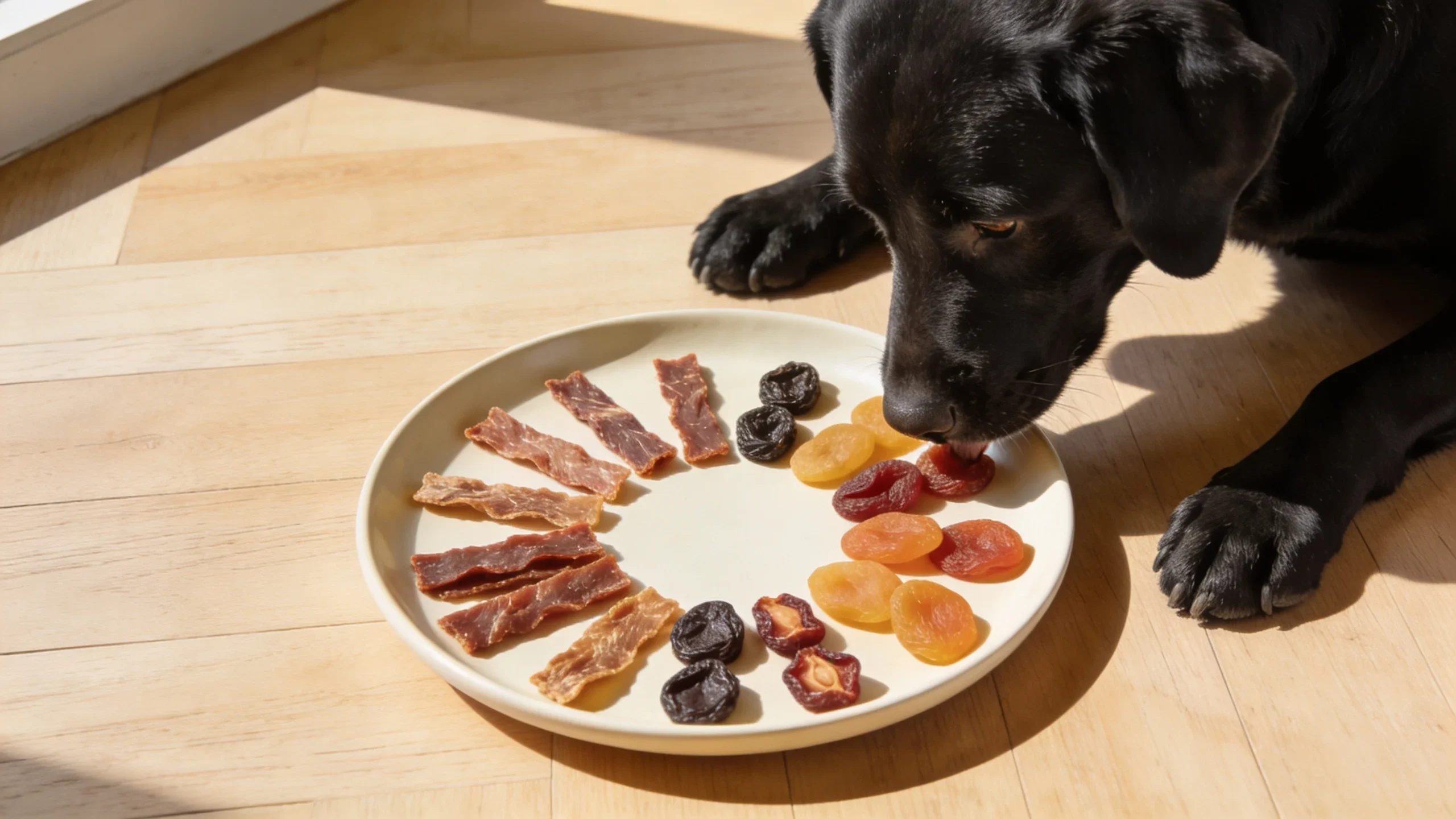
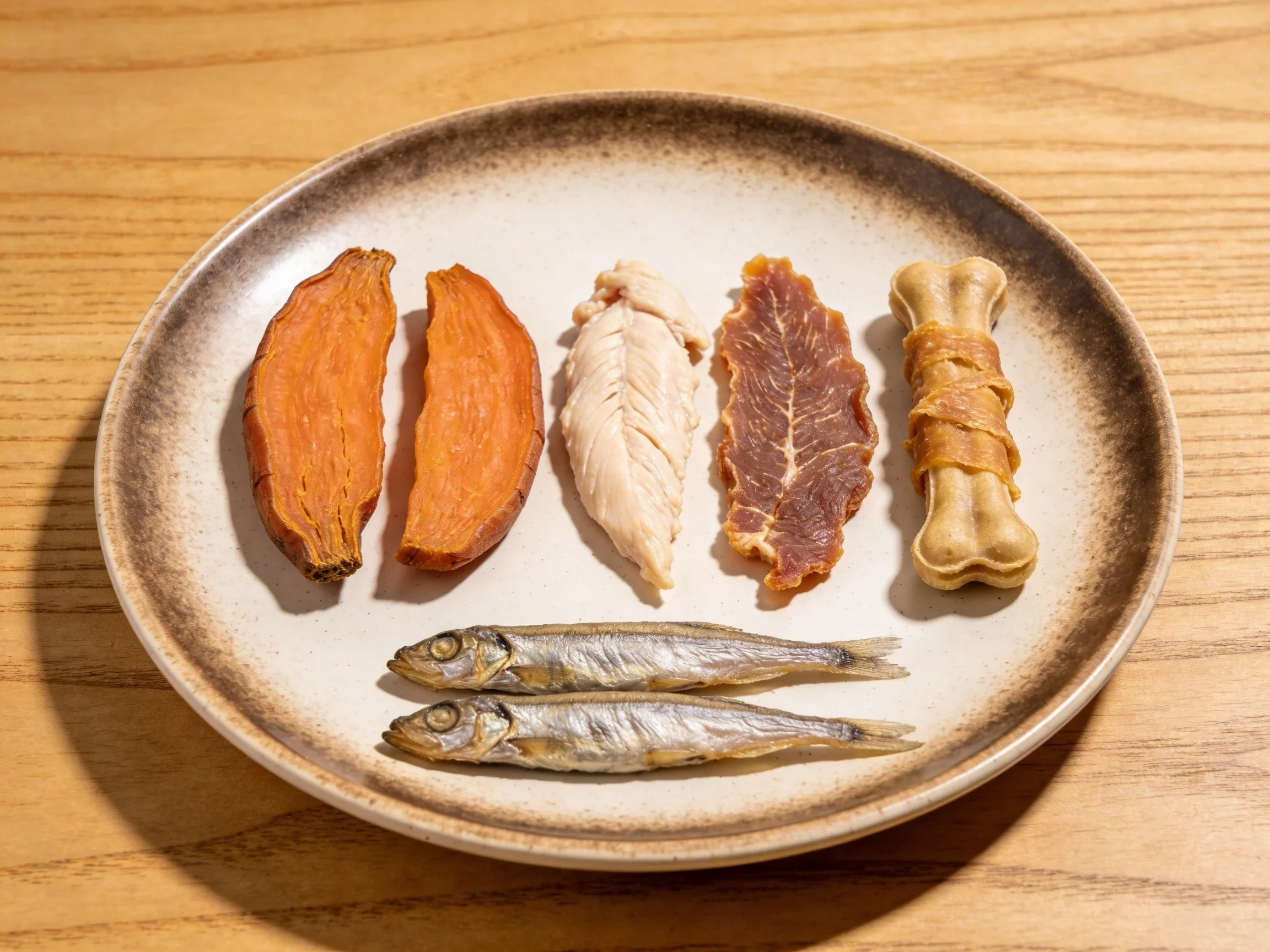
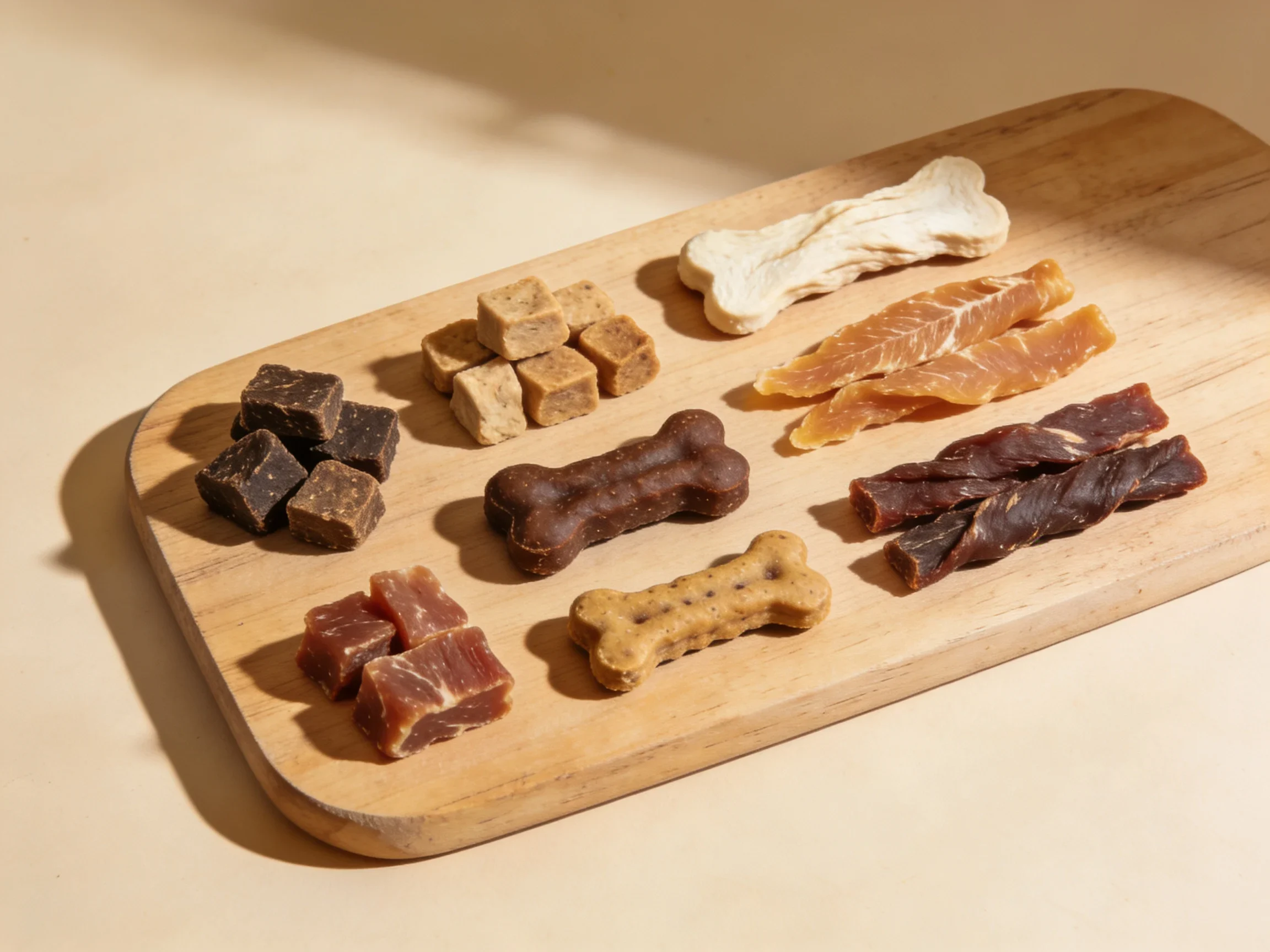
Walk through a Korean pet specialty store—or browse a Korean pet e-commerce platform like Gmarket's pet section—and the dominant product format is immediately obvious: single-ingredient, minimally processed, air-dried or freeze-dried treats.
This isn't just a fleeting trend. It's a response to a market that already understands what goguma (고구마, Korean sweet potato) tastes like, what dakgogi (닭고기, chicken) looks like when it's fresh, and exactly what should and shouldn't be in a dried version of either. Korean consumers apply the same scrutiny to their dog's snacks that they apply to their own banchan (side dishes).
Air-drying preserves nutritional integrity without high heat, retaining more natural enzymes and amino acids than conventional baking. Freeze-drying goes further, locking in moisture content below 3% and eliminating the need for any preservative system whatsoever. Neither process requires glycerin—a common humectant in soft chews that adds unnecessary calories and can cause digestive upset in sensitive dogs—artificial colorings, or synthetic flavor enhancers.
Premium Korean brands have adopted human-grade sourcing as a baseline, not a marketing claim, ensuring ingredients pass inspection under the same criteria applied to food for human consumption. (Open Survey Pet Trend Report)
This standard automatically excludes the "4D meat" (dead, dying, diseased, disabled) that has historically entered lower-tier pet food supply chains in other regions. When you choose a brand that adheres to these principles, you are essentially buying human-quality food that has been prepared for a canine palate. Browse our store to see how this standard translates into actual product formulations.
Why Is Testing and Traceability More Advanced in Korea?
Korea's government-backed Smart Factory initiative has pushed manufacturing technology across sectors, and the pet food industry absorbed it. Many Korean pet treat suppliers now operate facilities where every production batch carries a QR code linking directly to verified data.
Scan the QR code on a bag of Pupsday treats, and you're not reading a marketing page—you're reading a supply chain document. That level of transparency is rare globally and reflects Korea's broader investment in agricultural traceability infrastructure, originally built for human food exports. This system allows owners to verify:
- The farm of origin for the primary protein or produce
- Harvest or slaughter date
- Processing facility HACCP certification number
- Third-party lab test results for that specific batch
The National Agricultural Products Quality Management Service (NAQS) enforces specific heavy metal limits that manufacturers must verify per batch: Lead ≤ 5.0 mg/kg, Cadmium ≤ 1.0 mg/kg, Arsenic ≤ 2.0 mg/kg. These aren't aspirational targets; they're pass/fail thresholds with documented lab results required for compliance.
For dog owners who want to verify what's actually in their pet's food, this infrastructure makes Korean-sourced treats among the most auditable products on the market. Check the Pupsday blog for breakdowns of specific ingredient sourcing by product line.
Frequently Asked Questions
Are dog treats from Korea as safe as those made in the USA?
Korean and U.S. treats both operate under structured regulatory frameworks, but they differ in approach. Korea requires pre-market formulation approval for registered manufacturers; the U.S. does not mandate this under FSMA. Korean facilities also face HACCP certification requirements and batch-level heavy metal testing enforced by NAQS. For single-ingredient, minimally processed treats specifically, Korean manufacturing standards are highly competitive with—and in traceability, often ahead of—U.S. equivalents.
What does HACCP certification mean for dog treats?
HACCP (Hazard Analysis and Critical Control Points) is an internationally recognized food safety protocol that maps every production stage for potential hazards—biological, chemical, and physical—and establishes mandatory control points to eliminate them. For dog treats, this means documented temperature controls, sanitation records, ingredient verification, and finished-product testing. A Korean facility with HACCP certification has passed third-party audits confirming these systems are operational.
Does South Korea use chemical preservatives in dog snacks?
Premium Korean dog treats—particularly air-dried and freeze-dried formats—are formulated without synthetic preservatives like BHA, BHT, or ethoxyquin. The low moisture content achieved through air-drying (typically below 15%) and freeze-drying (below 3%) makes chemical preservation unnecessary. While some conventional mass-market soft chews may still use preservative systems, the premium sector focuses on natural stability.
How can I verify if a Korean dog treat brand is reputable?
Look for three specific indicators: MAFRA registration (the brand should be able to provide their facility registration number), HACCP certification documentation, and batch-level third-party lab reports. Reputable brands make these available on request or via QR code on packaging. If a brand cannot provide these documents, it is best to choose a more transparent alternative.
Are there any specific ingredients in Korean treats I should avoid?
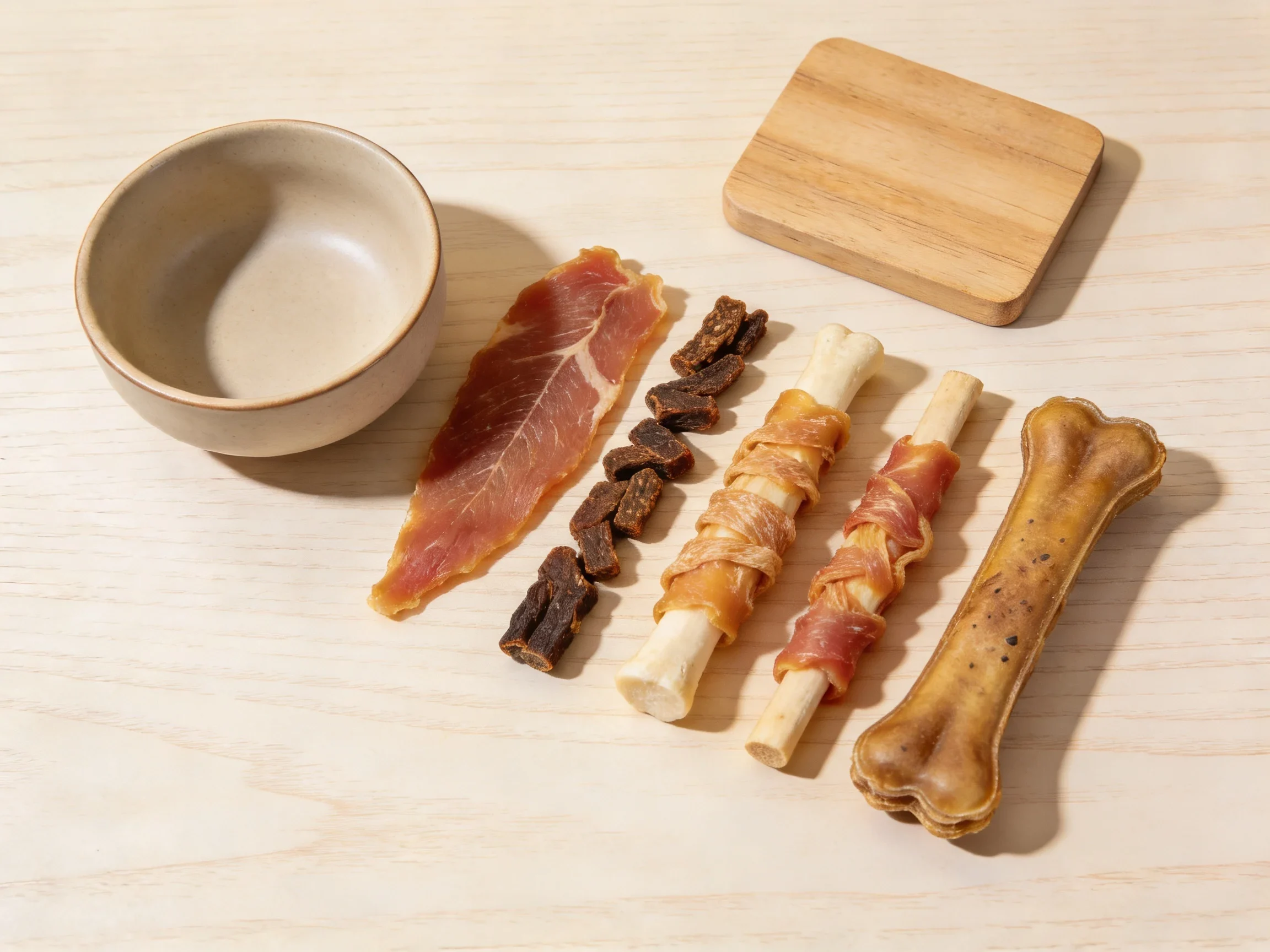
While most premium Korean treats are cleaner than Western counterparts, always check for propylene glycol (a humectant), artificial colorings (like Red 40 or Yellow 5), and xylitol (which is toxic to dogs). Single-ingredient Korean treats—such as dried sweet potato, chicken breast, or duck jerky—carry essentially none of these risks because they contain only the primary protein or vegetable.
What is a Korean factory's typical inspection process?
A Korean factory producing pet treats must undergo initial registration with MAFRA, followed by regular unannounced audits by the Animal and Plant Quarantine Agency (APQA). These inspections check for facility hygiene, ingredient storage protocols, and the presence of pathogens like Salmonella or E. coli.
The Bottom Line
Korean dog treats, sourced from MAFRA-registered, HACCP-certified facilities with QR-code traceability and batch-level heavy metal testing, represent one of the most rigorously verified treat categories available to dog owners today. The combination of government regulation, consumer demand for human-grade standards, and Smart Factory traceability infrastructure closes the gaps that have historically made pet food sourcing opaque. Pupsday works directly with Korean suppliers who meet every standard outlined in this article—browse our store to find single-ingredient treats with full sourcing transparency.
Sources
- Korea Rural Economic Institute (KREI) — Pet Industry Growth Data: https://www.krei.re.kr/
- Ministry of Agriculture, Food and Rural Affairs (MAFRA) — Control of Livestock and Fish Feed Act: https://www.mafra.go.kr/
- National Agricultural Products Quality Management Service (NAQS) — Heavy Metal Limits in Pet Food: https://www.naqs.go.kr/
- Animal and Plant Quarantine Agency (APQA) — Annual Pet Food Safety Testing: https://www.apqa.go.kr/
- Open Survey Pet Trend Report (Korea) — Human-Grade Ingredient Preference Data: https://www.opensurvey.co.kr/
- U.S. Food and Drug Administration — FSMA Pet Food Guidelines: https://www.fda.gov/animal-veterinary/animal-food-feeds/pet-food
- Korea Institute for Animal Products Quality Evaluation — HACCP Certification Framework: https://www.ekape.or.kr/
Next step
Want help finding the right treats?
Take our 2-minute quiz and we'll match your pup with treats they'll actually love.