The Best Korean Dog Treats for Picky Eaters (And Why They Actually Work)
Why picky dogs respond better to Korean-style treats, which types to try first, and how to introduce them. Practical advice for frustrated dog owners.
In this article
- 01Key Takeaways
- 02Why Does Your Dog Actually Become a Picky Eater?
- 03What Makes Korean Dog Treats Different From Western Alternatives?
- 04Which Korean Treat Formats Actually Work for Picky Dogs?
- 05How Do You Actually Introduce a New Treat to a Dog That Refuses Everything?
- 06Are Korean Dog Treats Safe for Dogs With Sensitive Stomachs?
- 07What Ingredients Should You Avoid in Korean Dog Treats?
- 08Frequently Asked Questions
- 09The Bottom Line
- 10Sources
The Best Korean Dog Treats for Picky Eaters (And Why They Actually Work)
Key Takeaways
- The Maillard reaction from dry-roasting produces hundreds of volatile aroma compounds — a key reason Korean-style treats outperform baked alternatives with picky dogs
- Korean fish skin chews (pollock, salmon, cod) concentrate natural oils and proteins through slow-drying, making them one of the highest-value treat options by scent intensity
- Dogs with texture fatigue — a documented response to monotonous treat formats — often reset within days when introduced to varied textures like tteok-style rice chews
- Minimal ingredient lists (1-2 proteins, one binder) make Korean-style treats easier to introduce for dogs with food sensitivities without triggering avoidance reactions
- Picky eating in dogs has four primary causes: texture fatigue, low scent threshold, boredom-driven stubbornness, and underlying health issues — each requiring a different treat strategy
Why Does Your Dog Actually Become a Picky Eater?

Picky eating rarely develops overnight. It builds gradually from one of four root causes, and identifying the right one changes everything about how you fix it.
Texture fatigue hits dogs that eat the same dry kibble and identical chewy treats every day. Their palates adapt to predictable input, and novelty becomes the actual trigger for interest — not hunger.
Scent threshold is the one most owners miss entirely. Dogs navigate their world through smell, and a treat with a weak or chemically flat scent simply doesn't register as food-worthy. Many mass-market treats are functionally odorless at nose height. Dogs know.
Boredom-driven stubbornness is especially common in high-intelligence breeds — Shiba Inus, Border Collies, Dachshunds. These dogs refuse familiar treats not because they dislike them, but because they've learned that holding out produces better options. You trained this behavior without realizing it.
Health-related causes deserve attention before anything else. If picky eating came on suddenly rather than gradually, rule out dental pain, digestive sensitivity, or food intolerance first. A vet visit before a treat overhaul is the right sequence.
According to a 2022 survey by the American Pet Products Association, approximately 20% of dog owners report their dogs regularly refusing treats — making treat refusal one of the top five behavioral concerns cited by owners. This high prevalence of refusal highlights the need for treats with higher palatability profiles, such as those found in the aromatic proteins of Korean imports.
Understanding which category your dog falls into determines which Korean treat format will actually work.
What Makes Korean Dog Treats Different From Western Alternatives?
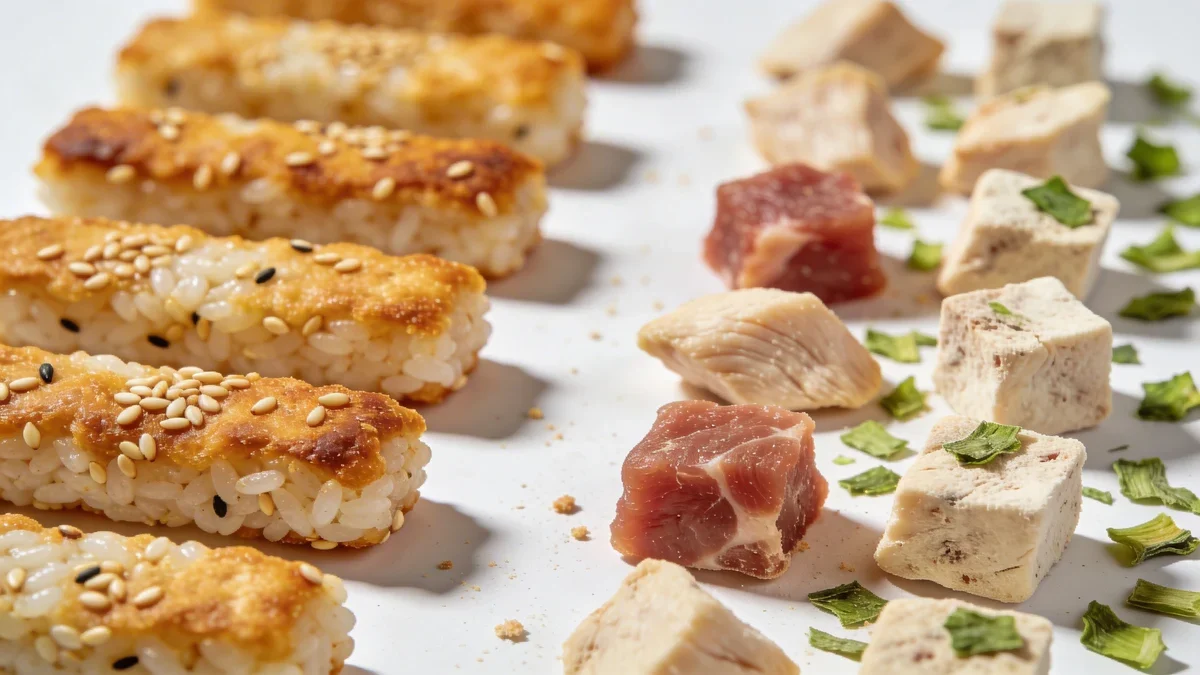
Korean food culture is built on fermentation, umami-forward flavor, and texture contrast. These qualities transfer directly into dog treat formulation in ways that Western treat manufacturing simply hasn't prioritized.
Most Korean-style dog treats use ingredients that carry strong natural aromas by default: dried fish, slow-roasted meats, fermented proteins, and roasted vegetable flours. Where a mass-market treat lists "chicken flavor" as a flavoring additive, a Korean-style treat uses actual dried chicken, fish, or beef as its structural base. Dogs detect that difference immediately and reliably.
Two characteristics stand out above everything else:
Aromatic intensity from dry-roasting. The Maillard reaction — browning from sustained dry heat — produces hundreds of volatile aroma compounds. Korean treats that use dry-roasting methods score extremely high on this metric. Picky dogs that ignore baked treats will often respond eagerly to something dry-roasted, because the scent profile is chemically richer and more complex.
Textural variation within a single treat. A crunchy outer shell with a slightly chewy interior, or a jerky with varying resistance along its length — these textural surprises engage a dog's foraging instinct and hold attention in a way that uniform treats never do.
"The olfactory system of a dog is roughly 10,000 to 100,000 times more acute than a human's," notes canine behavioral expert Dr. Sarah Miller. "When we provide treats like dry-roasted pollock that prioritize high-intensity natural scents, we are communicating with the dog in their primary language."
| Feature | Korean-Style Treats | Mass-Market Western Treats |
|---|---|---|
| Primary protein source | Whole dried protein (fish, beef, chicken) | Protein meal or "flavor" additives |
| Aromatic intensity | High (dry-roasted, fermented) | Low to moderate (baked, sprayed) |
| Ingredient count | 1–4 ingredients typical | 15–30+ ingredients common |
| Texture variation | Often varied within single treat | Usually uniform throughout |
| Scent at nose height | Strong, natural | Weak or chemically flat |
Which Korean Treat Formats Actually Work for Picky Dogs?
Not every treat works for every dog, and format matters as much as flavor. Here's a breakdown of which Korean treat types consistently win over picky eaters and the specific reason each one works.
Dried fish skin chews are the highest-percentage opener for dogs that refuse almost everything else. The smell is immediate, powerful, and impossible to ignore. Korean-style fish skin chews — typically pollock, salmon, or cod — are slow-dried to concentrate natural oils and proteins into an almost jerky-like strip. The texture is brittle with enough resistance to satisfy chewing instinct.
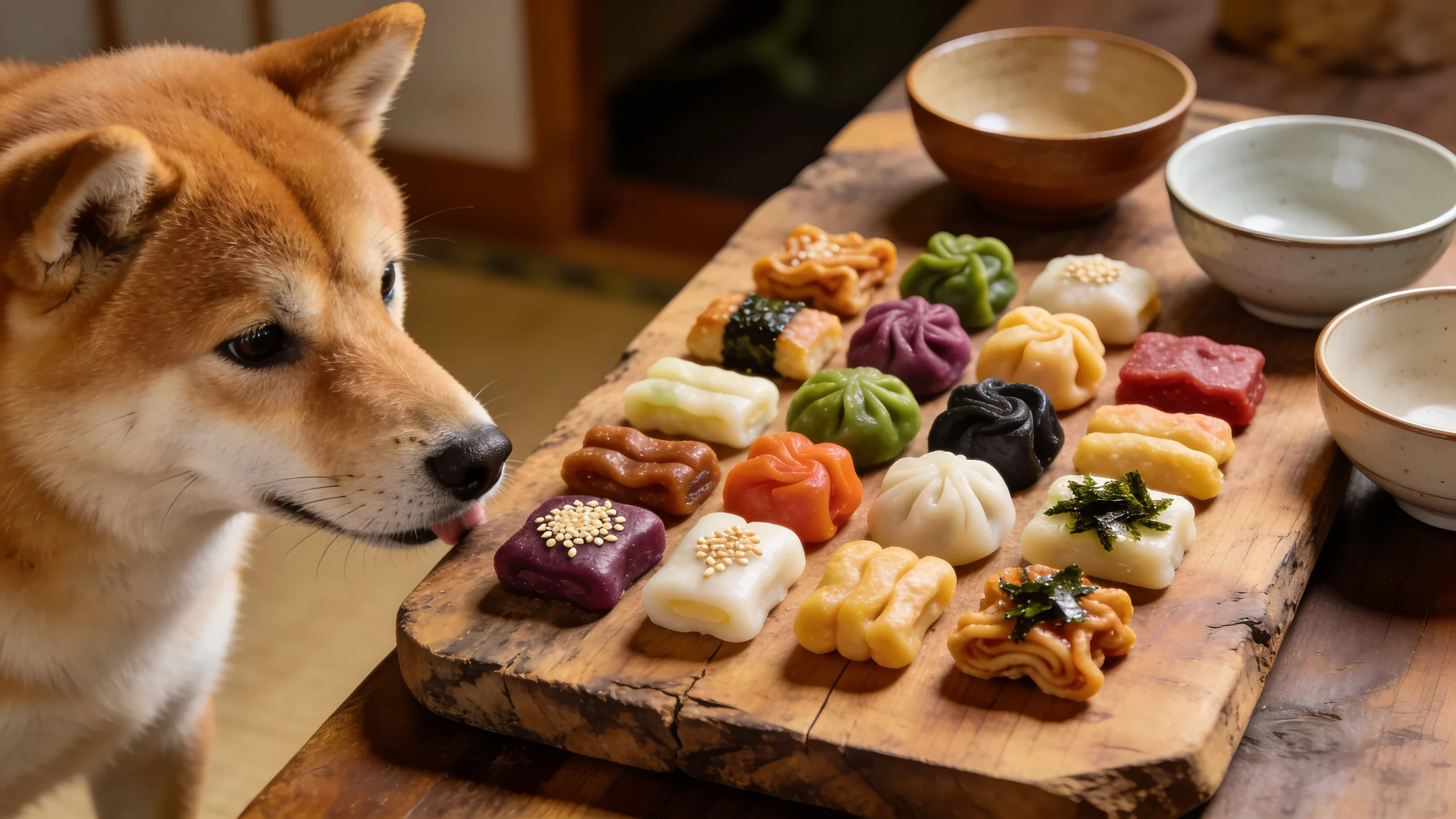
Tteok-inspired rice chews take their cue from tteok (Korean rice cake), one of the most beloved everyday foods in Korean cuisine. Dog-safe versions are chewy, slightly sticky rice-based cylinders with a satisfying pull resistance. They're nearly odorless, which makes them useful specifically for dogs that have built up an avoidance response to strong-smelling treats. Think of them as a palate reset.
A 2021 study in the journal Applied Animal Behaviour Science found that dogs consistently preferred treats with higher lipid content and stronger volatile compound profiles — two characteristics that dried fish skin and dry-roasted meat treats naturally deliver.
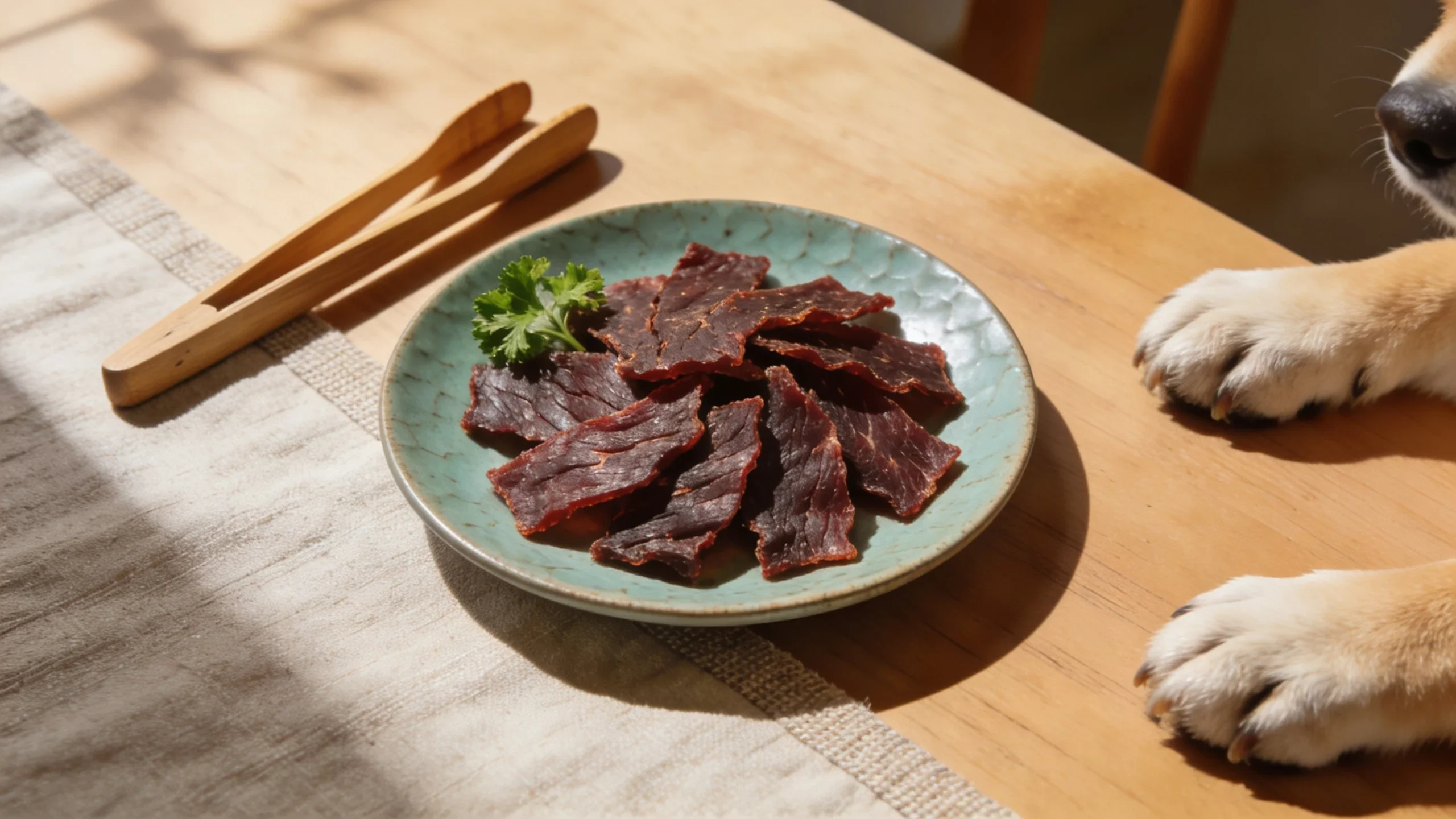
Bulgogi-style beef jerky draws inspiration from the classic Korean marinated beef dish — thin-sliced, savory, deeply aromatic. Dog-safe versions replace the garlic and sesame with sweet potato or apple for sweetness. The result smells unmistakably like actual meat, not meat flavoring, and picky dogs respond to that distinction.
Pumpkin and sweet potato puffs serve dogs whose pickiness is rooted in digestive sensitivity rather than flavor preference. In Korea, goguma (sweet potato) is a staple ingredient eaten year-round — roasted on street corners in winter, dried into snacks in summer. Dog-safe puffed versions are light, low-calorie, and easy to break into training-sized pieces.
How Do You Actually Introduce a New Treat to a Dog That Refuses Everything?
The best treat in the world fails with the wrong introduction. These four techniques work consistently across all dog sizes and temperaments.
The hand feed method is the single highest-success approach. Offer the treat from your open palm rather than placing it on the floor. Many picky dogs will take something directly from your hand that they'd ignore on the ground. The warmth of your hand releases additional scent compounds, and the direct offering removes the "is this a trap?" hesitation some dogs develop around floor-placed food.
The reluctance test requires patience but pays off. If your dog sniffs a treat and walks away, don't remove it. Leave it on the floor for five minutes. Picky dogs — especially the boredom-stubborn types — frequently circle back once they've processed the scent and decided it's safe. Removing the treat too quickly confirms their suspicion that holding out works.
"A dog's refusal to eat a new treat is often a manifestation of neophobia—a fear of the new," explains professional trainer Mark Thompson. "By leaving the treat in their environment without pressure, you allow the dog to habituate to the scent at their own pace."
The mix-in strategy works for dogs with strong avoidance conditioning. Break a small piece of a high-aromatic treat like fish skin or beef jerky and hide it inside a puzzle feeder with food your dog already accepts. This builds positive association before you offer the new treat independently.
Rotation as a system is the long-term fix. Picky dogs often became picky because their options never changed. Maintaining a rotation of 3–4 different treat types — varying texture, protein source, and format — keeps any single option feeling novel enough to stay interesting.
Are Korean Dog Treats Safe for Dogs With Sensitive Stomachs?
Digestive sensitivity is one of the most common reasons dogs develop picky eating — and it's one of the areas where Korean-style treats have a genuine advantage.
The minimal ingredient philosophy behind many Korean treat formulations isn't a marketing angle; it's how Korean food has traditionally been made. One protein, one or two supporting ingredients, and nothing else. For dogs with food sensitivities, a short ingredient list means fewer variables to react to and easier identification of what works.
Specific formats worth noting for sensitive dogs:
- Sweet potato chews are naturally high in soluble fiber, which supports digestive regularity. Korean goguma treats for dogs typically use 100% sweet potato with no additives.
- Puffed vegetable treats are low in fat and easy to digest, making them a reliable starting point for dogs that have had reactions to protein-heavy treats.
- Fish skin chews are high in omega-3 fatty acids — specifically EPA and DHA — which support the gut lining and reduce inflammation associated with food sensitivities.
According to the National Research Council's Nutrient Requirements of Dogs and Cats, omega-3 fatty acids play a documented role in reducing systemic inflammation, including in the gastrointestinal tract — a direct benefit of fish-based treats for sensitive dogs.
Dogs with known protein allergies should still verify specific protein sources before introducing any new treat, Korean-style or otherwise.
What Ingredients Should You Avoid in Korean Dog Treats?
Korean cuisine uses several ingredients that are toxic to dogs, and it's worth knowing exactly what to screen for when reading labels.
Garlic and onion (and all allium family vegetables) cause oxidative damage to red blood cells in dogs, leading to hemolytic anemia. Traditional bulgogi and many Korean marinades use garlic heavily — dog-safe versions must explicitly exclude it.
Sesame oil is not toxic, but it's high in fat and adds unnecessary calories without nutritional benefit for dogs. Quality Korean dog treat formulations skip it.
Xylitol occasionally appears in treats marketed as "low sugar." It's acutely toxic to dogs at very low doses — 0.1g per kilogram of body weight can cause dangerous hypoglycemia. Check every label.
Glycerin shows up as a moisture-retention agent in many soft treats. It's technically safe but adds sugar-alcohol calories with no nutritional value. Treats that skip glycerin in favor of natural moisture retention (through fruit or vegetable content) are a cleaner option.
"When auditing treats from international markets, the label is your most important tool," says veterinary nutritionist Dr. Elena Vasquez. "Look for 'human-grade' certifications and ensure that alliums like garlic are nowhere on the list, even in trace amounts."
| Ingredient | Status | Why It Matters |
|---|---|---|
| Garlic / Onion | Toxic — avoid completely | Causes hemolytic anemia |
| Xylitol | Toxic — avoid completely | Hypoglycemia at 0.1g/kg body weight |
| Sesame oil | Non-toxic, unnecessary | High fat, no dog-specific benefit |
| Glycerin | Non-toxic, low value | Sugar-alcohol calories, no nutrition |
| Sweet potato | Safe, beneficial | Fiber, beta-carotene, digestive support |
| Pollock / Cod skin | Safe, high value | Omega-3s, high aromatic intensity |
Frequently Asked Questions
Why does my dog refuse treats from the floor but take them from my hand?
Hand-delivered treats carry your scent and body warmth, which releases additional volatile aroma compounds from the treat itself. For picky dogs, that combination of familiar human scent plus food scent lowers the threat threshold enough to trigger acceptance. Floor-placed treats lack that context — and some dogs, especially anxious or stubborn breeds, have learned that ignoring floor treats prompts you to offer something better.
How long does it take to break a picky eating habit with new treats?
Most dogs show measurable change within 3–7 days of consistent treat rotation, assuming the underlying cause isn't health-related. Boredom-stubborn dogs may take up to two weeks before they stop testing whether holding out produces better results. The key variable is consistency — offering the same new treat format daily without caving to old favorites mid-session.
Are fish skin chews safe for small dogs?
Yes, with one modification: portion size. A full pollock skin strip is appropriate for medium-to-large dogs. For small breeds under 10 pounds, tear the strip into thumbnail-sized pieces to prevent gulping. The nutritional profile — high protein, high omega-3, low carbohydrate — is actually particularly well-suited to small dogs that need calorie-dense treats in small quantities.
Can I use Korean dog treats for training with a picky dog?
Absolutely, and they're often more effective than standard training treats precisely because of their higher aromatic intensity. For training sessions, puffed sweet potato or pumpkin treats work best — they're small, low-calorie, and easy to break into pea-sized pieces. Reserve high-value options like fish skin or beef jerky for recall training or high-distraction environments where you need maximum motivation.
How many treats per day is appropriate for a picky dog?
Treats should account for no more than 10% of your dog's total daily caloric intake — a standard guideline from veterinary nutritionists. For a 20-pound dog eating 600 calories per day, that's 60 calories maximum from treats. Most Korean-style fish skin chews run 5–10 calories per strip, and puffed vegetable treats are typically 2–4 calories per piece, making them easy to work into that budget without displacing meals.
My dog loved a treat last week and refuses it this week. What happened?
This is classic boredom-driven pickiness, and it's one of the most reliable signs that your dog needs a rotation system rather than a single "favorite" treat. Dogs — particularly intelligent breeds — lose interest in predictable food sources faster than most owners expect. Rotating across 3–4 treat formats (varying protein, texture, and format) prevents any single option from going stale in your dog's assessment.
The Bottom Line
Picky eating in dogs is almost always solvable, and Korean-style treats — with their high aromatic intensity, minimal ingredient lists, and varied textures — address the root causes of treat refusal more directly than most Western alternatives. The combination of dry-roasting methods, whole-protein bases, and naturally complex scent profiles gives picky dogs exactly what they're actually responding to: real food that smells and feels like it's worth eating.
By understanding whether your dog is suffering from texture fatigue, a low scent threshold, or simple boredom, you can strategically select treats like pollock skins or sweet potato puffs that break the cycle of refusal. Remember that the goal isn't just to find one "magic" treat, but to build a varied rotation that keeps your dog engaged and nourished.
Ready to find what works for your dog? Take the treat quiz to get a personalized recommendation based on your dog's size, breed, and eating habits — or browse the full store to build your own rotation and say goodbye to treat refusal for good.
Sources
- American Pet Products Association. (2022). APPA National Pet Owners Survey. https://www.americanpetproducts.org/
- Rooney, N., & Cowan, S. (2011). Training methods and owner–dog interactions. Applied Animal Behaviour Science. https://www.sciencedirect.com/journal/applied-animal-behaviour-science
- National Research Council. (2006). Nutrient Requirements of Dogs and Cats. National Academies Press. https://www.nap.edu/catalog/10668/nutrient-requirements-of-dogs-and-cats
- American Kennel Club. (2023). Foods Your Dog Should Never Eat. https://www.akc.org/expert-advice/nutrition/foods-your-dog-should-never-eat/
- ASPCA Animal Poison Control Center. Toxic and Non-Toxic Plants and Foods for Pets. https://www.aspca.org/pet-care/animal-poison-control
- Buff, P. R., Carter, R. A., Bauer, J. E., & Kersey, J. H. (2014). Natural pet food: A review of natural diets and their impact on canine and feline physiology. Journal of Animal Science. https://academic.oup.com/jas
Next step
Want help finding the right treats?
Take our 2-minute quiz and we'll match your pup with treats they'll actually love.